

Reviewed by Dr. Ankeet Choxi
Recent advances in lung regeneration stem cells research offer hope for patients with chronic respiratory diseases. While human lungs have limited natural regenerative capacity, emerging stem cell therapies show promise for repairing damaged lung tissue in conditions like COPD, pulmonary fibrosis, and emphysema, though most treatments remain experimental.
Understanding Natural Lung Regeneration
The human respiratory system possesses some inherent regenerative capabilities, but these are limited compared to other organs like the liver or skin. Lung repair stem cells exist naturally in the airways and alveoli, but their ability to restore function after significant damage is often insufficient for patients with chronic respiratory diseases.
In healthy individuals, the lungs can repair minor injuries through several mechanisms. The bronchial epithelium, which lines the airways, contains basal cells that act as stem cells to replace damaged surface cells. Similarly, the alveolar epithelium has type II pneumocytes that can differentiate into type I cells to maintain gas exchange surfaces.
However, when faced with chronic inflammation, repeated injury, or severe acute damage, these natural repair mechanisms become overwhelmed. Conditions like chronic obstructive pulmonary disease (COPD), idiopathic pulmonary fibrosis, and emphysema involve progressive lung destruction that exceeds the organ’s natural healing capacity.
- Basal cells in airways provide limited bronchial repair
- Type II pneumocytes maintain alveolar surfaces under normal conditions
- Chronic diseases overwhelm natural regenerative processes
- Scar tissue formation often impairs lung function recovery
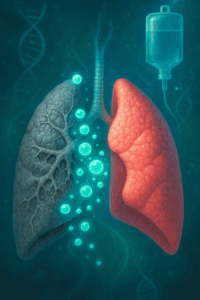
Stem Cell Approaches to Lung Repair
Scientists are investigating various stem cell types for their potential to enhance lung regeneration. Pulmonary regeneration stem cells research focuses primarily on mesenchymal stem cells (MSCs), induced pluripotent stem cells (iPSCs), and endogenous lung stem cells.
Mesenchymal Stem Cell Therapy
Mesenchymal stem cells, typically derived from bone marrow or adipose tissue, represent the most studied approach for lung regeneration. MSC lung disease trial data suggests these cells may help through multiple mechanisms: reducing inflammation, promoting tissue repair, and potentially differentiating into lung-specific cell types.
Research indicates that lung regeneration with MSCs may benefit patients through paracrine effects, where the stem cells secrete growth factors and anti-inflammatory molecules that stimulate the body’s own repair processes. This approach shows particular promise for conditions involving chronic inflammation.
Alveolar Regeneration Strategies
Alveolar regeneration with stem cells represents a critical frontier, as the alveoli are essential for gas exchange. Scientists are exploring how stem cells might restore these delicate structures damaged by diseases like emphysema or acute respiratory distress syndrome.
Current research investigates whether transplanted stem cells can integrate into existing lung tissue and contribute to alveolar stem cell growth. Early studies suggest that while direct cell replacement may be limited, stem cells can stimulate endogenous repair mechanisms.
- MSCs offer anti-inflammatory and regenerative properties
- iPSCs provide patient-specific treatment potential
- Endogenous lung stem cells may be enhanced or activated
- Combination therapies may prove most effective
Current Clinical Trials and Outcomes
Several clinical trials are evaluating stem cell therapies for respiratory diseases, with varying degrees of success. Stem cell COPD therapy trials have shown modest improvements in some patients, though results remain mixed and require further investigation.
A significant area of research involves stem cell therapy pulmonary fibrosis, where conventional treatments have limited effectiveness. Early-phase trials suggest that MSC therapy may slow disease progression and improve quality of life measures, though larger studies are needed to confirm these findings.
For emphysema patients, research into stems cells for emphysema recovery has produced encouraging preliminary results. Some studies report improvements in exercise tolerance and lung capacity stem cell improvement, though the mechanisms underlying these benefits are still being elucidated.
The safety profile of stem cell therapies for lung diseases appears generally favorable in controlled clinical settings. Most reported side effects are mild and transient, including temporary fever or minor injection site reactions. However, long-term safety data remains limited due to the relatively recent development of these therapies.
Challenges and Future Directions
Despite promising early results, significant challenges remain in developing effective lung regeneration stem cells therapies. The complex architecture of lung tissue, with its intricate network of airways, blood vessels, and gas exchange surfaces, makes regeneration particularly challenging.
Cell delivery methods represent a major hurdle. Researchers are exploring various approaches, including intravenous infusion, intratracheal delivery, and direct lung injection. Each method has advantages and limitations regarding cell distribution, survival, and integration into existing tissue.
The optimal timing of stem cell therapy also requires further investigation. Some evidence suggests that earlier intervention may be more effective, but determining the ideal treatment window for different conditions remains an active area of research.
Future directions include developing tissue engineering approaches that combine stem cells with biomaterial scaffolds to create functional lung tissue. These strategies may eventually enable replacement of entire lung segments or lobes for patients with end-stage disease.
- Improving cell delivery and retention methods
- Optimizing treatment timing and dosing protocols
- Developing combination therapies with growth factors
- Creating bioengineered lung tissue constructs
- Establishing standardized outcome measures for trials
More About STEMS Health Miami Beach
Our double-board certified physicians are here to answer your questions and tailor stem cell treatments specifically for your long-term health goals. STEMS Health also provides stem cell therapies for a range of conditions, including tennis injuries, golf related injuries, jaw disorders, and other regenerative treatments, for patients in the Miami Beach area.
Frequently Asked Questions
Are stem cell lung treatments currently available to patients?
Most lung regeneration stem cells therapies remain experimental and are only available through clinical trials or specialized research programs at major medical centers.
How effective are stem cells for treating COPD?
Stem cell COPD therapy has shown modest benefits in some studies, including improved quality of life and exercise tolerance, but results vary significantly between patients.
What types of lung diseases might benefit from stem cell therapy?
Research focuses on COPD, pulmonary fibrosis, emphysema, and acute lung injury. Pulmonary regeneration stem cells may help conditions involving chronic inflammation and tissue damage.
Are there risks associated with stem cell lung treatments?
In clinical settings, stem cell therapies generally show good safety profiles with mild side effects. However, unregulated treatments carry significant risks and should be avoided.
How long before stem cell lung therapies become widely available?
Widespread availability likely requires several more years of research to establish optimal protocols, confirm safety, and demonstrate consistent efficacy across different patient populations.
