

If you’re experiencing debilitating hand and wrist pain, you’re likely unable to type at a computer, use a cell phone, or play your favorite racquet sports. Injuries and conditions of the hand or wrist truly impact all areas of daily life – from work to workouts. Turn to STEMS Health Regenerative Medicine for hand and wrist pain relief with PRP treatment.
Our doctors can help craft a PRP treatment strategy specific to your pain and biomechanics, helping relieve discomfort and allowing you to return to everyday activities. Request your initial hand and wrist pain consultation today!

Dr. Jarred Mait is a licensed general medicine and functional medicine physician. He completed medical school at the University of Miami and then Anesthesiology training at the University of Miami/Jackson Memorial Hospital. He is the owner and Medical Director of Pulse & Remedy.
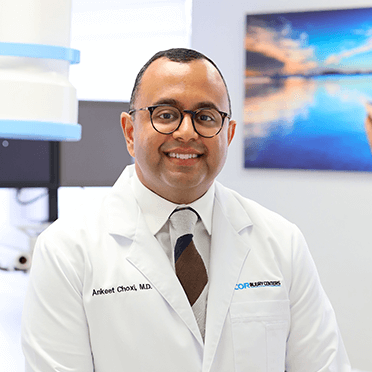
Dr. Choxi is a double-board certified Anesthesiologist and Interventional Pain Management Physician. He completed medical school at Vanderbilt University in Nashville, TN, followed by Anesthesiology training at the University of Miami and Pain Management fellowship training at New York University (NYU) – Langone Health.
Your hands and wrists combine a complex biomechanical structure that includes:
Injuries and conditions affecting these hand and wrist structures are the most common causes of localized pain. In their search for long-term relief, patients throughout the U.S. are now choosing PRP as an alternative to invasive surgical hand and wrist repair and pharmaceuticals.
PRP therapy represents the cutting edge of regenerative medicine, harnessing your body’s healing capacity to address both acute injuries and chronic conditions. While PRP is a relatively new regenerative care option, research highlights its value for hand and wrist pain patients.
By forming customized treatment plans based on this latest research, our PRP doctors can help resolve debilitating wrist pain in the long term.
Your PRP treatment begins with your initial consultation at our Miami Beach clinic. We’ll introduce you to PRP, help answer your questions, and then begin the diagnostic stages. Diagnostics can help both assess the cause behind your wrist and hand pain and determine the prospective viability of PRP treatment.
Upon confirming the potential treatment value of PRP injections, we’ll invite you back to the clinic to begin treatment. The initial phase of PRP therapy is blood sample collection. We’ll draw a blood sample from your arm, which we use to separate the healing elements in the platelets and plasma for your PRP injection.
Our laboratory team employs dual-spin centrifugation technology to isolate and concentrate the healing components from your blood sample.
On the day of your procedure, our board-certified PRP doctors use advanced imaging to precisely target the source of your hand and wrist pain. The PRP injection appointment will require about two hours of your time and will include a post-treatment assessment to ensure your comfort.
Our specialized PRP protocols address a comprehensive range of hand and wrist pain issues, including:
Degenerative Conditions:
Trauma and Overuse Injuries:
We’re continuing to identify conditions and injuries suitable for PRP treatment. Contact our clinic directly to book your consultation and discuss the potential value of PRP therapy.
Our physicians, Dr. Ankeet Choxi and Dr. Jarred Mait combine decades of regenerative medicine expertise with cutting-edge techniques. Their approach integrates the latest research with personalized treatment strategies for optimal outcomes.
As Florida pioneers in regenerative medicine, we maintain state-of-the-art diagnostic and treatment capabilities, optimizing treatment efficiency and patient outcomes.
Beyond PRP, we offer an integrated approach to healing, incorporating complementary regenerative therapies, including stem cell applications, exosome therapy, and advanced peptide protocols.
Take the next step towards long-term pain relief with PRP! Contact our Miami Beach team online today or call 305-315-0815 to schedule your initial diagnostic consultation and explore the possibilities of advanced PRP therapy.
Your appointment will take approximately 2 hours. First, we’ll draw your blood (similar to a routine blood test) and process it for 30 minutes using our advanced centrifuge system. During this time, you can relax in our comfortable treatment suite. The actual injection procedure takes about 30 minutes – we’ll clean the treatment area, apply a local anesthetic, and use ultrasound guidance to precisely place the PRP solution. After treatment, you’ll remain in our care for a short monitoring period before heading home.
While you may feel some pressure during the injection, most patients report minimal discomfort thanks to our advanced numbing techniques. We use a combination of topical anesthetic cream and local anesthetic injections to ensure your comfort. The injection site may feel sore for 24-48 hours afterward, similar to a deep bruise. This is normal and indicates the healing response is beginning.
follow your doctor’s instructions about rest and elevation. Light activities can usually resume after 3-4 days, but avoid strenuous exercise for at least 2 weeks.
Full return to high-impact activities or sports should be gradual and typically occurs between 4-6 weeks post-treatment, based on your specific condition and healing progress. Always follow your STEMS Health doctor’s personalized timeline for activity resumption.
For carpal tunnel syndrome, most patients see significant improvement with 1-2 treatments spaced 6 weeks apart. Hand and wrist arthritis typically requires a series of 3 treatments spaced 4-6 weeks apart for optimal results. However, every case is unique. During your consultation, we’ll examine your imaging results, symptoms, and medical history to create a customized treatment plan.
For office workers, we recommend taking 24-48 hours off from typing after hand and wrist PRP. When you return, plan to take frequent breaks and limit continuous typing to 30-minute sessions for the first week. We’ll provide you with specific ergonomic modifications and exercises to support your recovery. Some patients find voice-to-text software helpful during the initial recovery period.