

Table of Contents
Globally, the number of people with diabetes has risen from 108 million in 1980 to over 537 million in 2024. The data shows the number will grow to 783 million by 2045. Now, stem cell therapy research is providing the medical community and diabetes patients around the world hope of treatment through restoring the ability to produce insulin.
Our latest post explores the exciting research into stem cells for diabetes and explains the role stem cell therapy could play in improving the daily lives of diabetes patients.
Understanding the Causes of Diabetes
In patients with Type 1 diabetes, the body destroys the insulin-producing beta cells in the pancreas. For patients with Type 2 diabetes, their body either doesn’t produce enough insulin or becomes resistant to insulin’s effects. Day-to-day life for the average diabetes patient involves continual blood-sugar monitoring and medication management.
Patients with diabetes are seeking alternative treatments to help:
- Reduce the emotional burden of insulin regimens
- Limit anxiety and depression associated with glycemic control
- Better control mood and improve interpersonal relationships
Stem Cell Therapies and Islet Cells
Studies indicate that stem cells can develop into specialized cells to regenerate damaged pancreas tissue and form new insulin-producing beta cells. Medical researchers are focusing their work on islet cells. Islet cells are pancreatic cells that produce hormones such as glycogen and insulin, which help control blood sugar levels.
Researchers in Vancouver, B.C. published a study in Nature Biotechnology showing a medical implant containing millions of lab-grown pancreatic islet cells improved insulin production for patients with type-1 diabetes. Their study included 10 participants, with three patients experiencing a steady, regulated, and self-sustaining supply of insulin throughout the 12 months of the study. One patient from the study experienced a 44% reduction in required daily insulin administration.
Another promising study published in Cell focused on a 25-year-old woman diagnosed with type-1 diabetes and treated with pancreatic islet cells. The patient achieved 98% blood-glucose time-in-range levels within a year of treatment. The study notes highlight that “achievement of insulin independence demonstrated a restoration of the patient’s glycemic control”.
Cell Production Techniques
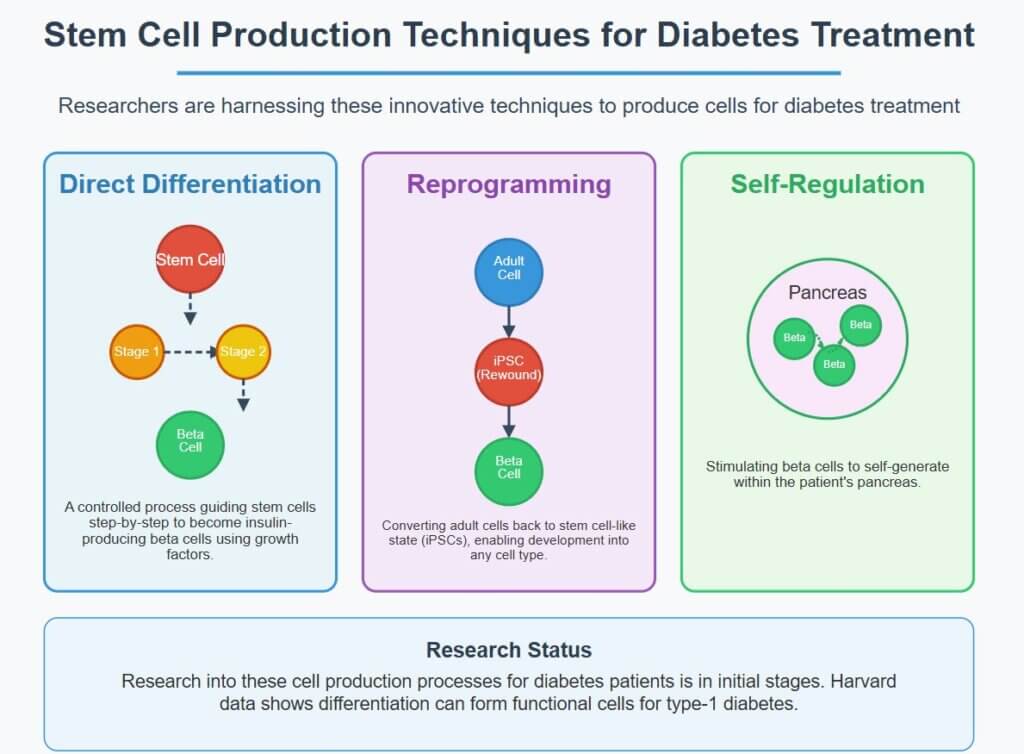
Researchers are harnessing the following techniques to produce cells for diabetes treatment.
Direct Differentiation
Direct differentiation is a controlled process through which stem cells are guided step-by-step to become specific cell types – in this case, insulin-producing beta cells. The process mimics natural pancreatic development by exposing stem cells to growth factors and signaling molecules at pre-determined times.
Reprogramming
Stem cell reprogramming, also known as cellular reprogramming or induced pluripotent stem cell (iPSC) technology, is a process where researchers convert adult cells back into a stem cell-like state. This technique “rewinds” mature cells to their embryonic condition, where they regain the ability to develop into any cell type.
Self-Regulation
Research can also help beta cells self-generate, making more beta cells in the pancreas of the diabetes patient.
The research into the value of these cell production processes for diabetes patients is only in the initial stages. However, data from Harvard shows that processes such as differentiation can have practical applications in forming functional cells to treat type-1 diabetes.
The Next Steps in Stem Cell Treatment for Diabetes
While stem cell-based therapies for diabetes are still in the early stages of research and development, the rapid pace of discovery in the stem cell market promises a brighter future where treatment, not just management, is an option for millions globally.
The STEMS Health Regenerative Medicine doctors welcome patients throughout the United States to our Miami clinic. If you have any questions about diabetes management or the role of stem cells in improving your long-term health, you can request a consultation with our medical team by calling (305) 677-0565 or booking online through our contact form.
Sources:
https://www.nature.com/articles/s41587-022-01219-z
