

Anterior Cruciate Ligament (ACL) tears can be a significant hurdle, often prompting considerations of surgical interventions. However, the data shows non-surgical injection treatments offer hope for those exploring alternatives. This guide from the board-certified doctors at STEMS Health in Miami explains several innovative and minimally invasive approaches, considering their potential for ACL tear recovery without invasive surgery.
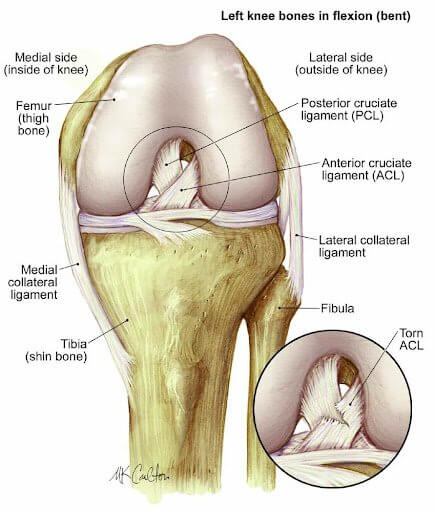
Image from the Institute for Athletic Medicine
Understanding ACL Tears
Before exploring non-surgical options, understanding ACL tears is pivotal. Whether resulting from sports injuries, sudden pivots, or other traumas, a personalized consultation aids in tailoring the right solution. The aim is not only recovery but also preventing future complications.
What are the most common causes of ACL tears?
When it comes to ACL tears, understanding the common mechanisms that frequently overstrain this critical knee ligament provides insight into prevention.
-
Sudden stops or change in direction: sudden stops while running or rapidly changing direction can put immense strain on the ACL, often causing it to tear. This frequently happens in sports like football, soccer, tennis, and basketball.
-
Awkward landings: landing awkwardly after jumping puts pressure on the knee in ways the ACL cannot handle. Improper alignment from an awkward landing can cause the ACL to get caught and torn.
-
Slowing down suddenly while running and pivoting: when sprinting or running quickly in one direction, rapidly slowing down to pivot places significant stress on the knee joint. This abrupt stopping motion accounts for many non-contact ACL tears.
-
Direct contact injuries: a forceful blow to the knee, often from colliding with another player (such as in basketball, football, or soccer), can also rupture the ACL.
-
Improper weight and body control: poor balance, improper form, and lack of muscle control around the knees can lead to instability that tears the ACL. It commonly contributes to ACL injuries in skiing and snowboarding.
With this overview of how ACL tears frequently occur, patients can then explore the latest regenerative medicine techniques at local Miami clinics to repair damaged ACLs.
ACL Tear Treatment Options
1. Platelet-Rich Plasma (PRP) Injections: Tapping into Natural Healing
PRP injections involve concentrating platelets from your blood and injecting them into the injured ACL. Studies, such as those featured in the American Journal of Sports Medicine, suggest that PRP injections can enhance healing and potentially reduce the need for surgery. This non-invasive approach harnesses the body’s natural healing mechanisms.
2. Corticosteroid Injections: Addressing Inflammation
Corticosteroid injections, known for their anti-inflammatory properties, can be an option for managing inflammation associated with ACL tears. The Arthroscopy Journal emphasizes their potential role in providing short-term relief, especially in the early stages of injury. It’s a measure to mitigate discomfort and facilitate rehabilitation.
3. Prolotherapy: Stimulating Tissue Repair
Prolotherapy involves injecting a solution, often dextrose, to stimulate the body’s natural healing processes; research has shown potential to promote tissue repair and relieve pain. It’s a consideration for those seeking non-surgical alternatives.
4. Hyaluronic Acid Injections: Lubricating the Joint
Hyaluronic acid injections aim to improve joint lubrication and reduce friction. While typically associated with osteoarthritis, they’re explored in the context of ACL injuries. The American Orthopaedic Society for Sports Medicine notes their potential in managing knee joint disorders. It’s a nuanced approach to support joint function.
Book ACL Tear Consultations with STEMS Health in Miami
It’s crucial to recognize that the effectiveness of non-surgical injection treatments can vary. If you’re exploring alternatives to ACL surgery, this guide serves as a starting point for an informed discussion on your journey to recovery. Personalized consultations with STEMS Health in Miami can help guide you toward the most fitting options.
References:
- Bae G, Kim S, Lee S, Lee WY, Lim Y. Prolotherapy for the patients with chronic musculoskeletal pain: systematic review and meta-analysis. Anesth Pain Med (Seoul). 2021 Jan;16(1):81-95. doi: 10.17085/apm.20078. Epub 2020 Dec 16. PMID: 33348947; PMCID: PMC7861898.
- Putra FD. Hyaluronic Acid in Improving Clinical Outcome of Knee Joint after Anterior Cruciate Ligament Reconstruction: A Systemic Review. Orthop J Sports Med. 2020 May 29;8(5 suppl5):2325967120S00053. doi: 10.1177/2325967120S00053. PMCID: PMC7273766.
- The Timing of Corticosteroid Injections Following Simple Knee Arthroscopy Is Associated With Infection RiskCancienne, Jourdan M. et al.Arthroscopy, Volume 35, Issue 6, 1688 – 1694
