

Table of Contents
Multilineage-differentiating Stress-enduring (Muse) cells have emerged as one of the most promising therapeutic approaches for treating various degenerative diseases and injuries. Since their discovery in 2007 at Tohoku University in Japan, Muse cells have shown remarkable healing properties, with global case studies highlighting their therapeutic potential.
Within this guide, we’ll offer insights into the functional role of Muse cells in the body, the range of Muse cell therapy treatments, and the benefits Muse cells offer over alternative regenerative care options.
What Are Muse Cells?
Muse cells are naturally occurring, endogenous pluripotent stem cells. They are found throughout the human body in various tissues, including peripheral blood, bone marrow, and connective tissue of nearly all organs. What makes Muse cells special is their ability to exist in a dormant, quiescent state under normal conditions, becoming activated only when the body experiences stress or tissue damage.
These cells are characterized by their expression of pluripotency markers such as Oct3/4, Nanog, and Sox2, while simultaneously demonstrating remarkable stress tolerance. Unlike induced pluripotent stem cells (iPSCs) or embryonic stem cells, Muse cells are naturally non-tumorigenic and cannot form tumors when transplanted, making them inherently safer for therapeutic applications.
How Muse Cells Work
The therapeutic mechanism of Muse cells combines several biological processes to promote tissue repair and regeneration. When introduced into the body, Muse cells use their innate “homing” ability to migrate to areas of tissue damage or inflammation. This migration is guided by chemical signals released by damaged tissues, ensuring therapeutic cells reach their target location with unmatched precision.
Once at the injury site, Muse cells can differentiate into various cell types depending on the local microenvironment and tissue needs.
Due to their multilineage differentiation capability, Muse can form cells from all three germ layers: endodermal cells (such as liver and pancreatic cells), mesodermal cells (including muscle, bone, and blood cells), and ectodermal cells (such as neural cells). This versatility enables comprehensive tissue repair that addresses multiple aspects of organ damage simultaneously.
Muse cells secrete various growth factors, cytokines, and other bioactive molecules that promote tissue healing, reduce inflammation, and support the survival and function of existing cells. This is known as the “paracrine effect” and contributes to the therapeutic benefits observed in clinical applications.
Clinical Benefits and Therapeutic Value
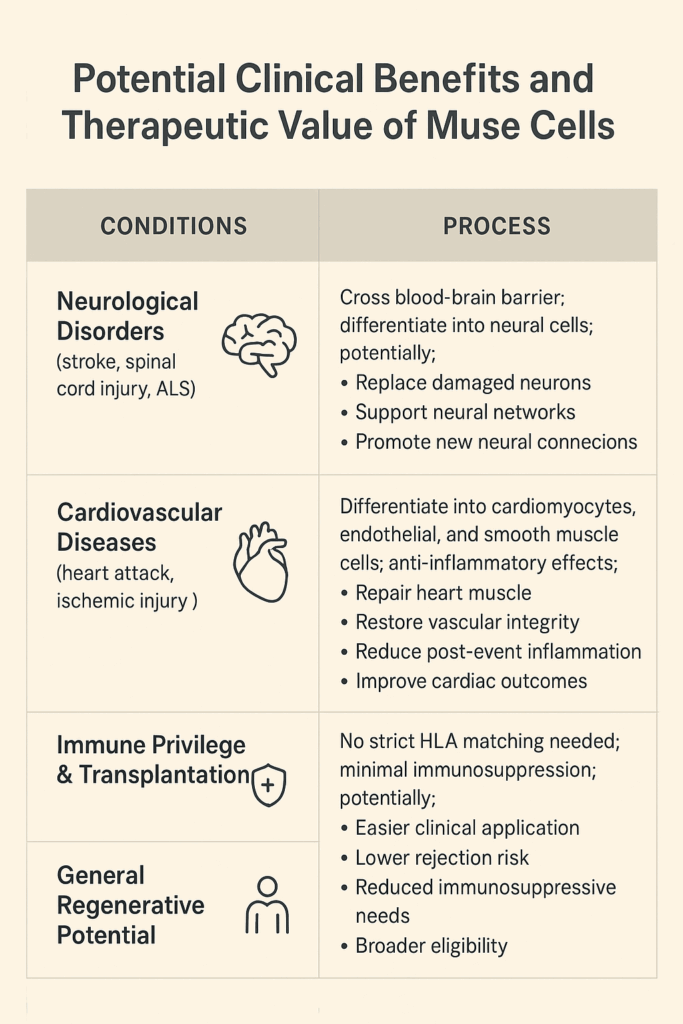
The clinical applications of Muse cell therapy span a wide range of conditions, with particular promise in neurological disorders and cardiovascular diseases. The therapeutic benefits stem from several key advantages that Muse cells offer over traditional treatment approaches.
Neurological Conditions
Muse cells have shown remarkable potential for treating stroke, spinal cord injuries, and neurodegenerative diseases like ALS. Their ability to cross the blood-brain barrier and differentiate into neural cells makes them particularly valuable in addressing conditions affecting the central nervous system. The cells can replace damaged neurons, support existing neural networks, and promote the formation of new neural connections.
Cardiovascular Conditions
Muse cells differentiate into cardiomyocytes (heart muscle cells), endothelial cells (cells that line the inner surface of all blood vessels, lymphatic vessels, and the heart chambers), and smooth muscle cells (which forms the walls of hollow organs like the intestines, stomach, and blood vessels), making them excellent candidates for treating heart attack damage and other cardiac conditions. Their anti-inflammatory properties also help reduce the secondary damage that often occurs after cardiac events.
The immune-privileged nature of Muse cells represents another significant clinical advantage. These cells can be transplanted between individuals without the need for perfect HLA matching or intensive immunosuppressive therapy, greatly simplifying the treatment process and reducing associated risks.
Muse Cell Case Studies and Clinical Evidence
Several clinical studies have demonstrated the safety and efficacy of Muse cell therapy in addressing various medical conditions, providing robust evidence for Muse cells’ therapeutic potential.
- A study published in the Journal of Investigative Dermatology showed Muse cells can help treat epidermolysis bullosa (EB) patients, who suffer from chronic skin ulcerations.
- A Phase 2 clinical trial in amyotrophic lateral sclerosis (ALS) patients showed that CL2020, a Muse cell-based product, can slow disease progression compared to historical controls. The study demonstrated that multiple doses were safe and potentially effective in slowing the deterioration of motor function.
- A randomized placebo-controlled trial of CL2020 in subacute ischemic stroke patients revealed Muse cells can selectively target damaged brain tissue and contribute to functional recovery, with patients showing improvements in neurological function compared to the placebo group.
- A first-in-human trial in Japan demonstrated that Muse cell injections were not only safe but also markedly improved left ventricular function in patients with ST-elevation myocardial infarction (STEMI). This study provides compelling evidence for the cardiac regenerative potential of Muse cells.
What Do I Need to Know When Considering Muse Cell Therapy?
Medical Eligibility and Assessment
Before considering Muse cell therapy, a comprehensive medical evaluation is essential to determine whether you are an appropriate candidate for this treatment. This evaluation begins with a thorough assessment of your disease stage and severity, as earlier intervention often proves more effective in achieving meaningful therapeutic outcomes. Your healthcare team will need to review all current medications to identify potential interactions and ensure compatibility with the cell therapy protocol.
Your overall health status, particularly immune system function, plays a crucial role in determining treatment eligibility and predicting outcomes. The assessment process also involves evaluating previous treatments and their outcomes, as this history can inform treatment decisions and help set realistic expectations. Age and life expectancy factors are additional considerations that influence the risk-benefit analysis for Muse cell therapy, helping to ensure that the potential benefits justify the investment in treatment.
Safety Profile and Risk Assessment
Muse cell therapy boasts an excellent safety record in clinical trials, with minimal adverse events reported across multiple studies and conditions. The non-tumorigenic nature of these cells helps eliminate potential cancer risks. Their immune-privileged properties further reduce the risk of rejection, making them suitable for allogeneic transplantation without the need for intensive immunosuppressive protocols.
Despite this strong overall safety profile, individual responses may vary, and careful consideration of personal risk factors is essential. Ongoing monitoring during and after treatment ensures early detection and management of any unexpected reactions. Most patients experience only mild, temporary side effects at the injection site, but understanding these possibilities helps in making an informed treatment decision.
Treatment Logistics and Planning
Muse cell therapy typically involves multiple treatment sessions to achieve optimal results, requiring careful planning and scheduling coordination. Muse cell therapy requires specialized clinical settings with appropriate monitoring equipment and trained personnel. Treatment timing can significantly impact effectiveness, making it important to coordinate with your existing treatment schedule and consider the optimal intervention window for your specific condition.
The post-treatment process includes structured follow-up appointments and monitoring schedules that extend beyond the initial therapy sessions. Coordination with your existing medical team ensures continuity of care and prevents treatment conflicts. Geographic considerations may also influence your decision, particularly if specialized Muse cell therapy centers are limited in your area.
Financial Planning and Cost Considerations
Muse cell therapy involves costs that are not always covered by insurance, requiring careful financial planning and budgeting. The need for multiple sessions can multiply overall expenses, making it important to understand the complete treatment protocol costs upfront. Additional expenses may include travel and accommodation costs if treatment requires relocation to specialized centers.
Exploring patient assistance programs or participating in clinical trials may help you reduce the total cost of your treatment. Many treatment centers offer payment plans or financing options that can help make therapy more accessible. For example, at STEMS Health in Miami, we provide a range of payment plans to help support patients considering Muse cell therapy. Our team can explain our payment plan options during your free Muse cell therapy video consultation.
Provider Selection and Quality Assurance
Choose a provider with proven experience in Muse cell therapy. Scheduling a free consultation helps assess the provider’s expertise, communication, and your comfort level. During the consultation, discuss any concerns or long-term goals you have in selecting Muse cell therapy and ensure their team can help you meet these personal health goals. Reviewing available patient testimonials can also help inform your selection.
Setting Realistic Expectations for Outcomes
Results vary significantly between individuals and their specific health conditions. Progress timelines can range from weeks to months, and some patients may require multiple treatment cycles to achieve desired outcomes. Benefits are often gradual rather than immediate, requiring patience and realistic expectations.
It’s important to understand that Muse cell therapy may slow disease progression rather than reverse existing damage, particularly in degenerative conditions. The long-term durability of effects varies by condition and individual patient factors, making ongoing monitoring and potential additional treatments part of the long-term care strategy.
Reach Your Health Goals with Personalized Muse Cell Therapy at STEMS Health
Muse cell therapy represents a rapid advancement in regenerative medicine, offering a naturally occurring, safe, and effective approach to treating various degenerative conditions. The growing body of clinical evidence supporting their use, combined with their unique biological properties, positions Muse cells as a transformative therapy for numerous medical conditions.
As research continues and universities and research centers complete further clinical trials, we can expect to see expanded applications and improved protocols for Muse cell therapy. For those considering Muse cell treatment options, working closely with qualified healthcare providers and staying informed about the latest developments is essential.
STEMS Health leads Muse cell therapy in Miami and treats patients across Greater Miami, Florida, and the United States. Take the next step toward your health goals. Book your free consultation with our experienced Muse cell therapy doctors today and discover if this innovative treatment is right for you.
Frequently Asked Questions (FAQ) About Muse Cells
What makes Muse cells different from other stem cells?
Muse cells are naturally occurring pluripotent stem cells that are non-tumorigenic, stress-resistant, and immune-privileged. Unlike embryonic stem cells or iPSCs, they don’t require genetic manipulation and don’t form tumors when transplanted.
How are Muse cells obtained for therapy?
Muse cells can be isolated from various tissues, including bone marrow, adipose tissue, and peripheral blood. For therapeutic applications, they are typically obtained from donors and expanded in specialized lab conditions.
Are there any side effects associated with Muse cell therapy?
Clinical trials have shown excellent safety profiles with minimal side effects. Most reported adverse events have been mild and unrelated to the cell therapy itself.
How long does it take to see results from Muse cell therapy?
Results vary depending on the condition being treated and individual factors. Some patients may see improvements within weeks, while others may require several months for optimal benefits to become apparent.
Can Muse cells be used to treat any medical condition?
While Muse cells show promise for many conditions, they are not appropriate for all medical situations. Current clinical evidence is strongest for neurological conditions, cardiovascular diseases, and certain injuries.
How much does Muse cell therapy cost?
Costs vary significantly depending on the condition being treated, location, and specific treatment protocol.
Can anyone receive Muse cell therapy?
Not everyone is a candidate for Muse cell therapy. A comprehensive medical evaluation is necessary to determine eligibility based on factors such as overall health, disease stage, and treatment goals.
Are the effects of Muse cell therapy permanent?
The longevity of effects varies depending on the condition treated and individual factors. Some patients may experience long-lasting benefits, while others might require additional treatments over time.
How do I find a qualified provider for Muse cell therapy?
Look for medical centers with experience in regenerative medicine and specific expertise in Muse cell therapy. Ensure providers follow appropriate regulatory guidelines and have participated in clinical trials or have extensive experience with the treatment.
