

Joint degeneration, a common ailment affecting many, can significantly impact one’s quality of life. While surgery is often pursued for relief, regenerative medicine offers revolutionary non-surgical solutions for joint repair.
Understanding Joint Degeneration
Joint degeneration, often associated with conditions like osteoarthritis, results in the gradual cartilage breakdown in joints like the knees, hips, hands, and spine. This causes bone-on-bone friction, stiffness, pain, and loss of function. Anti-inflammatory drugs and surgery aim to treat the symptoms, but newer approaches like regenerative medicine target the root causes.
Joint degeneration, also known as osteoarthritis or degenerative joint disease, is a breakdown of the cartilage that covers and protects the ends of bones where they meet to form joints. This allows bones to rub together, causing pain, swelling, stiffness and loss of motion in the joint.
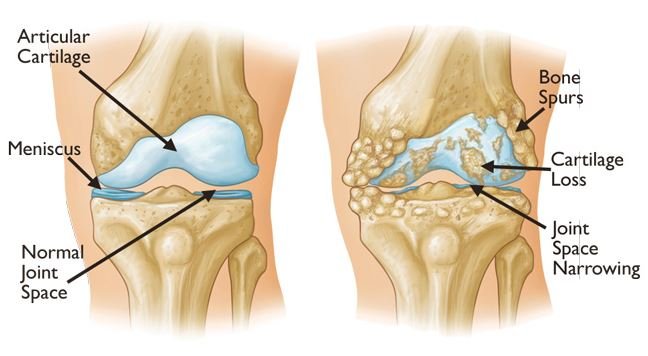
Example of joint degeneration in knee (via Orthocenter-SI)
There are several types of joint degeneration:
-
Cartilage degeneration: the cartilage breaks down and wears away, sometimes leaving bone rubbing on bone (this is the most common type).
-
Bony overgrowths: extra bone forms around the joints as the body tries to repair itself. These bone spurs or osteophytes can rub against soft tissues, causing pain and stiffness.
-
Synovial thickening: the synovial membrane that lines and lubricates joints can become inflamed and thickened, producing excess joint fluid and pressure.
-
Ligament laxity: ligaments that support joints can become stretched and loose, leading to joint instability.
-
Muscle atrophy: loss of muscle strength and mass around an affected joint occurs, due to disuse and pain. This leads to weakened support of the joint.
-
Bone changes: the bones under damaged cartilage alter and weaken over time. Cysts, sclerosis and deformities can develop.
Osteoarthritis can affect any joint, but most often impacts the knees, hips, hands, spine and feet. Factors like aging, obesity, joint injury, overuse and genetics contribute to one’s risk. Treatment aims to relieve pain and improve function, sometimes requiring surgery for joint repair or replacement in severe cases.

Below, we’ll explore how cutting-edge treatments like stem cell therapy and PRP treatments can alleviate joint degeneration.
Stem Cell Therapy: Restoring Joints Naturally
Stem cell therapy, a key player in regenerative medicine, has shown remarkable promise in addressing joint degeneration. The procedure involves extracting potent stem cells from the patient’s body, typically from adipose tissue or bone marrow. These cells are then strategically injected into the affected joint, promoting regeneration and repair.
Reduce pain without surgery: Unlike traditional surgical approaches, stem cell therapy offers a minimally invasive option, reducing the need for extensive postoperative pain management. Patients often experience quicker recovery times and find relief from pain without the prolonged downtime associated with surgery. An analysis in 2020 found that a single stem cell injection into arthritic knees significantly increased cartilage volume and reduced pain.
PRP Treatment: Precision in Healing
Platelet-Rich Plasma (PRP) treatment is another regenerative approach making waves in joint care. By concentrating platelets from the patient’s blood and injecting them into the affected joint, PRP harnesses the body’s natural healing mechanisms. Platelets contain alpha granules with growth factors like PDGF, TGF-β, and VEGF that regulate cell migration, proliferation, and tissue regeneration.
Slow joint degeneration and reduce pain: Injecting PRP into arthritic joints aims to initiate natural repair processes and slow degeneration. A meta-analysis of 10 randomized trials found PRP significantly reduced pain and improved physical function in knee osteoarthritis compared to hyaluronic acid injections.
PRP is valued for being minimally invasive and boasting a fast recovery time, while still providing a significant reduction in pain and discomfort and improving function and mobility.
Embracing a Pain-Free Future
Regenerative medicine brings new hope to those struggling with joint degeneration. Stem cell and PRP therapies promote natural healing and restoration of joint health as safer, non-surgical alternatives to traditional treatments. By targeting the root causes of degeneration, these cutting-edge solutions pave the way for reduced pain, optimal joint function, and improved quality of life.
If you’re exploring regenerative solutions for joint degeneration in South Florida, consult with the experts at STEMS Health. Our commitment to precision-targeted therapies, coupled with a patient-centric approach, ensures that your journey to pain-free living is met with the highest standards of care.
