

Reviewed by Dr. Ankeet Choxi
A look at emerging clinical research showing how adult stem cell transplantation may offer early visual improvements and a new therapeutic pathway for patients with advanced dry AMD and geographic atrophy.
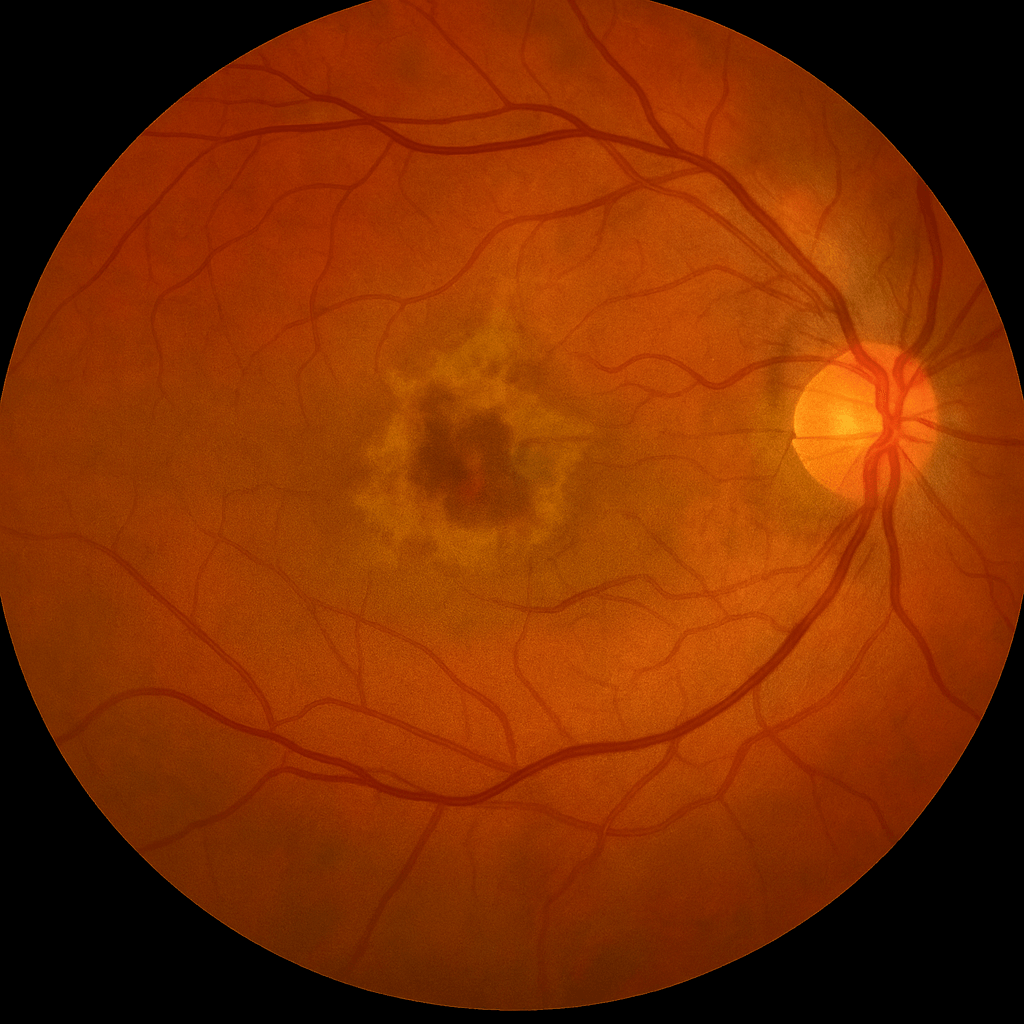
Summary: Emerging trials using adult stem cells for dry macular degeneration suggest potential in slowing or even reversing vision loss in patients with advanced dry AMD. This article explores recent findings, subretinal delivery methods, and how stem cell-based retinal regeneration may shape the future of geographic atrophy treatment.
Understanding Advanced Dry AMD and Geographic Atrophy
Advanced dry age-related macular degeneration (AMD), also known as geographic atrophy (GA), is a leading cause of irreversible vision loss in adults over the age of 65, affecting more than one million Americans. This condition involves the gradual breakdown of the retinal pigment epithelium (RPE) and associated photoreceptors in the macula—central to sharp, detailed vision.
Unlike the “wet” form of AMD, which can be treated with anti-VEGF injections, there are limited FDA-approved treatments for advanced dry AMD. Most therapies focus on slowing progression rather than restoring lost vision.
This unmet need has spurred growing interest in retinal regeneration therapies, particularly those involving adult stem cells with the ability to support or replace damaged cells in the macula.
Why Adult Stem Cells?
Adult stem cells, including mesenchymal stem cells (MSCs) and retinal progenitor cells (RPCs), offer several advantages in the retinal context:
- Immunomodulatory effects that may reduce inflammation in degenerating retinal environments
- Potential to integrate into the retina and support surviving photoreceptors
- Ethically acceptable sourcing, often from bone marrow or umbilical tissue
- Avoidance of tumorigenicity concerns associated with pluripotent or embryonic stem cells
Preclinical animal models have shown encouraging results using these cells to preserve retinal structure, slow degeneration, and improve visual responses.
Key Findings from Early-Phase AMD Stem Cell Trials
Several early-phase trials have evaluated the use of adult stem cells for dry macular degeneration, often in patients with geographic atrophy unresponsive to traditional therapies. Key findings include:
- Phase 1/2 studies using subretinal MSC or RPE cell transplants have reported early safety and no serious adverse events
- In some studies, low-dose cohorts showed functional improvements in visual acuity or contrast sensitivity over baseline at 6-12 months
- Structural imaging (OCT) demonstrated areas of retinal stabilization or delayed atrophy in treated eyes compared to fellow eyes
While these findings are still preliminary, they represent a shift from palliative to potentially restorative approaches in AMD treatment.
Mechanisms: How Stem Cells May Restore Vision
Photoreceptor Support and Retinal Integration
One of the key mechanisms through which adult stem cells may benefit AMD patients involves paracrine signaling. Rather than directly replacing lost retinal cells, transplanted cells may release neurotrophic factors and anti-inflammatory molecules that:
- Enhance the survival of nearby photoreceptors
- Protect the integrity of the retinal pigment epithelium
- Modulate immune activity in the macular region
Some cell types, such as retinal progenitor cells, may also integrate partially into host retinal layers, offering structural reinforcement and possibly contributing to cell replacement over time.
Subretinal Delivery Techniques
To maximize therapeutic benefit, most adult stem cell trials use subretinal injection – placing cells directly into the space between the retina and RPE. This localized delivery:
- Ensures close proximity to atrophic lesions
- Limits systemic exposure
- Reduces the likelihood of uncontrolled cell migration
Minimally invasive delivery methods, including microcatheter-assisted injections and image-guided delivery systems, have improved precision and reduced complication rates.
Challenges and Safety Monitoring
As promising as the results may be, clinical use of adult stem cells in AMD requires rigorous monitoring and ongoing validation. Key concerns include:
- Cell viability and consistency between batches, especially in allogeneic products
- Long-term durability of any observed improvements in vision or retinal structure
- Standardized biomarkers for confirming therapeutic efficacy across patients
To address these, most studies now include biomarker panels, advanced imaging (OCT, autofluorescence), and functional visual tests to track outcomes over 12–24 months.
Regulatory agencies like the FDA require that investigational trials demonstrate both clinical benefit and biological plausibility before advancing to late-phase trials.
What’s Next in Research and Clinical Translation
Several ongoing and upcoming studies will help determine how adult stem cells fit into the future treatment algorithm for dry AMD:
- Trials expanding into larger phase 2 cohorts to assess reproducibility of early benefits
- Combination therapies pairing cell therapy with gene modulation or complement inhibitors
- Development of personalized stem cell lines for autologous transplantation in genetically high-risk individuals
- Integration with AI-assisted retinal imaging for early diagnosis and stratification of GA progression
As knowledge advances, cell therapy may become a key element in the long-term management of retinal degenerative conditions – especially for patients with limited remaining options.
FAQs
Are stem cells currently FDA-approved for dry AMD?
No, adult stem cell therapies for dry AMD are still investigational. Early trials have shown promise, but more data is needed before widespread approval.
How are the stem cells delivered for eye treatment?
Most studies use subretinal injections, delivering cells into the space between the retina and RPE to target the area of geographic atrophy directly.
Do these treatments improve vision?
Some early-phase studies reported improvements in visual acuity and retinal structure, but these results are not yet consistent across larger populations.
Are there risks with retinal stem cell injections?
As with any intraocular procedure, there are risks including retinal detachment, inflammation, or infection. Most reported adverse events so far have been mild or procedural.
What is the next step in research?
Ongoing clinical trials aim to determine the optimal cell type, dose, and delivery method while tracking long-term safety and efficacy outcomes in larger groups.
Disclaimer: The information provided in this article is for educational and informational purposes only and is not intended as medical advice. Treatments and outcomes described may not be appropriate for every individual. Always consult a licensed healthcare provider to determine the best course of care for your specific needs.
Certain regenerative medicine procedures discussed – such as stem cell therapy, exosome therapy, or other biologic treatments – may be considered investigational or not FDA-approved for all conditions. Florida law requires that we disclose this status. While these procedures are offered in accordance with state and federal guidelines, their safety and efficacy have not been fully established by the U.S. Food and Drug Administration.
Results vary, and no guarantee of specific outcome or benefit is implied. All medical procedures involve potential risks, which should be discussed with your treating provider prior to treatment.
© STEMS Health Regenerative Medicine, Miami Beach, Florida. All rights reserved.
