

Summary: Triangular Fibrocartilage Complex (TFCC) tears are a common and painful wrist injury, often leading to surgery and extended recovery times. But a new regenerative treatment using stem cells may offer a non-surgical alternative. This article explores the potential of stem cell therapy to heal TFCC tears and restore wrist function without the need for invasive procedures.
- What is a TFCC Tear?
- Traditional TFCC Tear Treatments
- Stem Cell Therapy for TFCC Tears
- The Benefits of Stem Cell Treatment
- The Stem Cell Treatment Process
What is a TFCC Tear?The Triangular Fibrocartilage Complex (TFCC) is a important structure in the wrist, acting as a stabilizer and shock absorber. TFCC tears are injuries to this cartilage and surrounding ligaments, often caused by acute trauma or repetitive stress. Symptoms include wrist pain, swelling, and decreased range of motion. If left untreated, TFCC tears can lead to further joint instability and osteoarthritis.
Traditional TFCC Tear Treatments
Historically, the primary treatment options for TFCC tears have been:
- Rest and immobilization – Allowing the injury to heal through conservative measures, though this approach has limited effectiveness.
- Corticosteroid injections – Reducing inflammation, but not addressing the underlying cartilage damage.
- Surgery – Repairing or removing the torn TFCC, which requires extended recovery and rehabilitation.
While these treatments can provide some relief, they do not fully restore the TFCC or prevent long-term wrist instability and osteoarthritis. This has led researchers to explore alternative, regenerative approaches like stem cell therapy.
Stem Cell Therapy for TFCC Tears
Stem cells have the remarkable ability to develop into different cell types, including cartilage and ligament tissues. When injected into a TFCC tear, stem cells can stimulate the body’s natural healing processes, potentially regrowing and repairing the damaged area.Stem cell treatments for TFCC injuries are a relatively new, but promising, area of research. Early clinical trials have shown that stem cell injections can:
- Reduce pain and inflammation
- Improve range of motion and grip strength
- Regenerate damaged cartilage and ligaments
- Prevent the need for surgery in many cases
The Benefits of Stem Cell Treatment
Compared to traditional TFCC tear treatments, stem cell therapy offers several key advantages:
- Non-surgical approach – Stem cell injections are a minimally invasive alternative to complex wrist surgery.
- Faster recovery times – Patients can often return to normal activities within weeks, rather than months of rehabilitation.
- Long-term joint health – By regenerating damaged cartilage and ligaments, stem cell therapy may prevent future wrist instability and osteoarthritis.
For many patients, stem cell treatment represents a “wrist-saving” option – a way to avoid the risks and extended recovery of surgery while restoring full wrist function.
The Stem Cell Treatment Process
Stem cell therapy for TFCC tears typically involves the following steps:
- Stem cell extraction – A small sample of the patient’s own stem cells is collected, often from fat tissue or bone marrow.
- Cell cultivation – In a lab, the stem cells are isolated and multiplied to increase their numbers.
- Guided injection – Using imaging guidance, the concentrated stem cells are injected directly into the site of the TFCC tear.
- Rehabilitation – Patients undergo a brief period of immobilization, followed by physical therapy to restore strength and mobility.
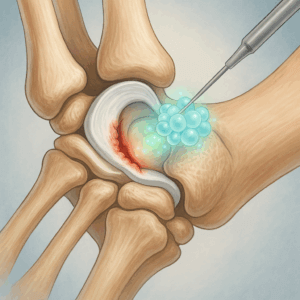
The entire process is completed in a single outpatient appointment, with many patients experiencing significant improvements within 4-8 weeks.While stem cell therapy for TFCC tears is still an emerging treatment, the results of clinical trials have been encouraging. By harnessing the body’s natural regenerative abilities, this innovative approach may offer a new solution for this common and debilitating wrist injury.
FAQs
How effective is stem cell therapy for TFCC tears?Early studies have shown that stem cell injections can effectively reduce pain, improve function, and regenerate damaged cartilage in many patients with TFCC tears, often eliminating the need for surgery.
Are there any risks associated with stem cell therapy for TFCC tears?
Stem cell treatments are generally considered safe, with a low risk of complications. As with any medical procedure, there are always potential risks, such as infection or allergic reaction, that should be discussed with a healthcare provider.
How long does the pain relief and functional improvement from stem cell therapy last?
The long-term benefits of stem cell therapy for TFCC tears can vary, but many patients experience lasting pain relief and improved wrist function for years, potentially preventing the need for future surgical intervention.
